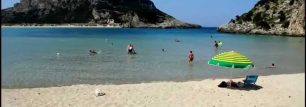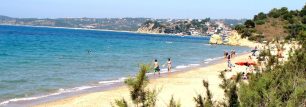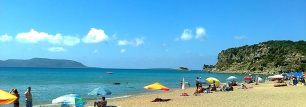
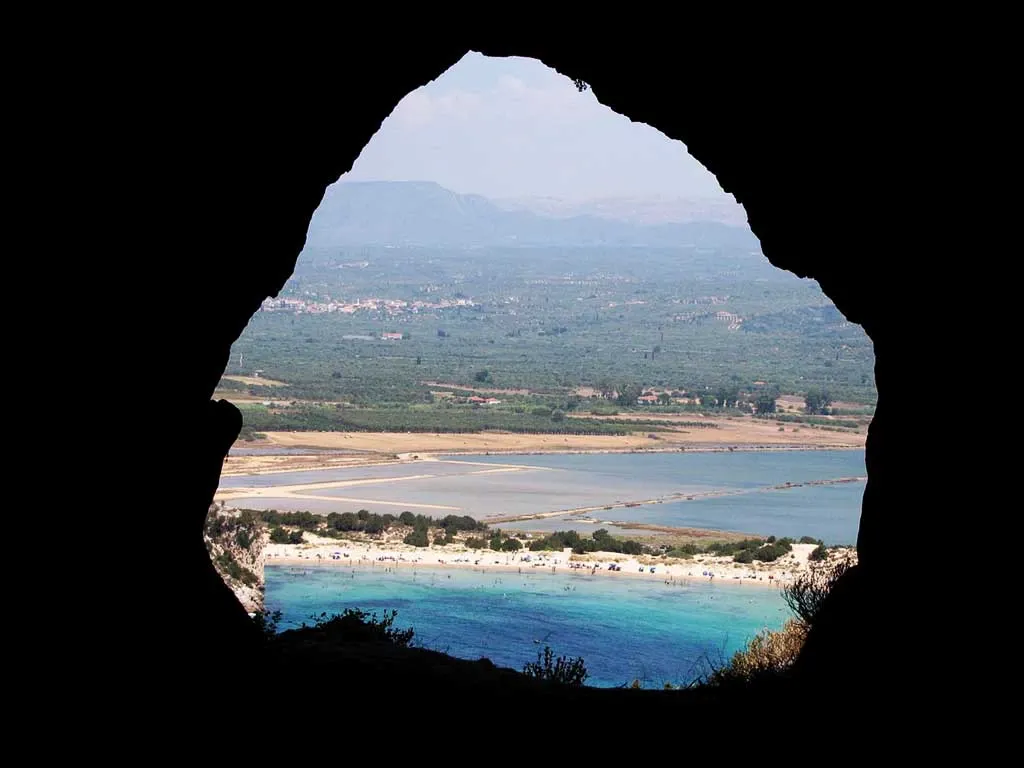
 Just outside Palaiokastro, towards Voidokoilia Bay, is ‘Nestor’s Cave’, with its triangular opening leading to a chamber of 44 by 20 by 30 metres, with a small number of stalactites and a chink in the roof; theyget everywhere. It was here, according to legend, that Hermes concealed the cattle of Apollo, which he had rustled in Pieria. It was here that the oxen of Neleus, Nestor’s father, were stabled. The cave bears traces of human presence, from Neolithic to classical times, in the shape of pottery finds. Mentioned in Pausanias, it was first explored by Schliemann, in 1874. Though the archaeologists have unearthed no epigraphic evidence to establish the identity of the deceased, the Mycenaean tholos tomb at the northern tip of Voidokoilia Bay was already famous, Pausanias tells us, as the Tomb of Thrasymedes, son of Nestor. Higher still, at Palaiokastro, there is a magnificent view across what was once the Neleid kingdom, the Ionian Sea, and towards the steading from which Voidokoilia likely got its name, the vourphovia, or ‘herds of cattle’.